astrodata
Solar System objects statistics


- Near-Earth objects and Potentially Hazardous Asteroid statistics
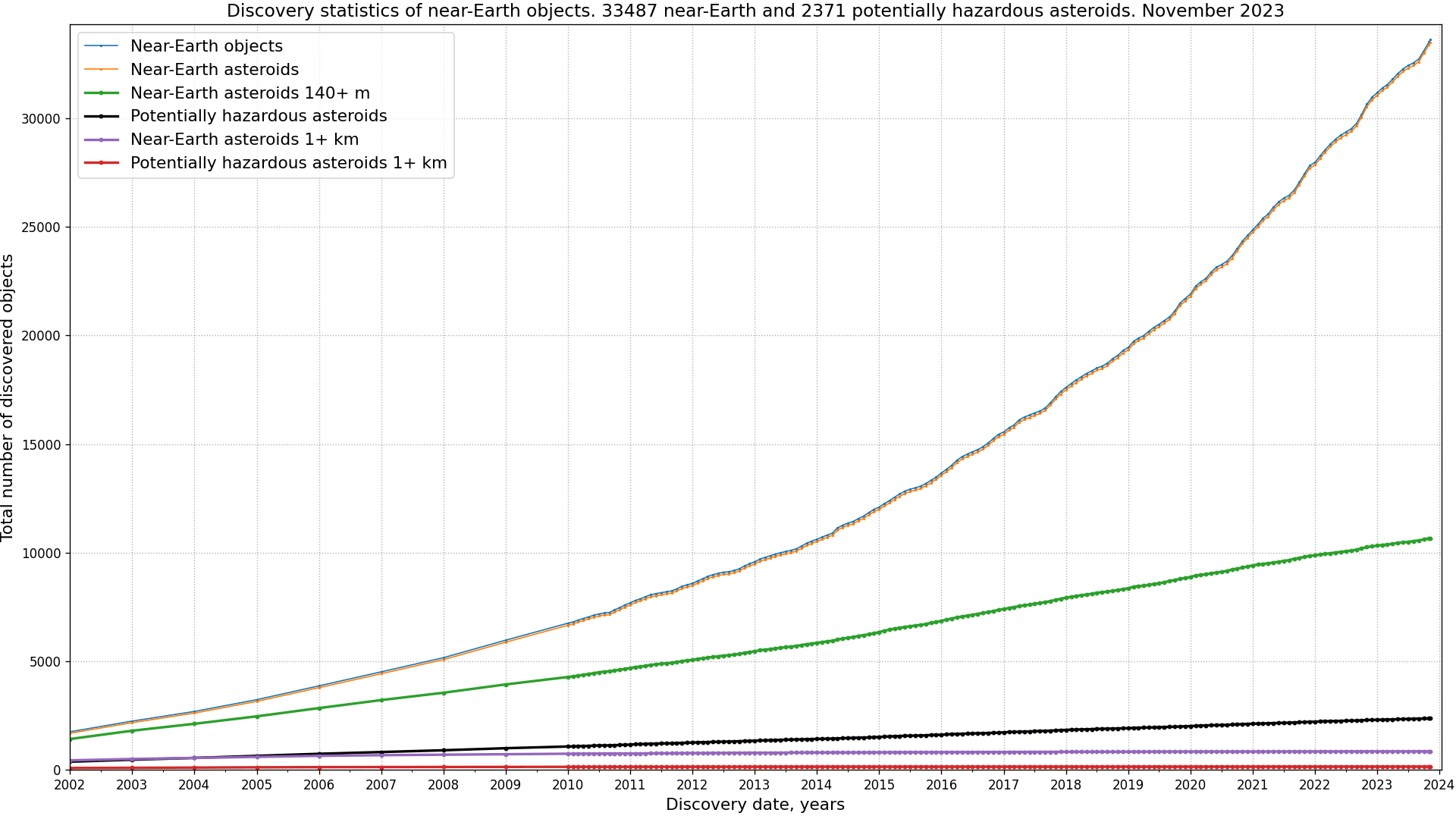
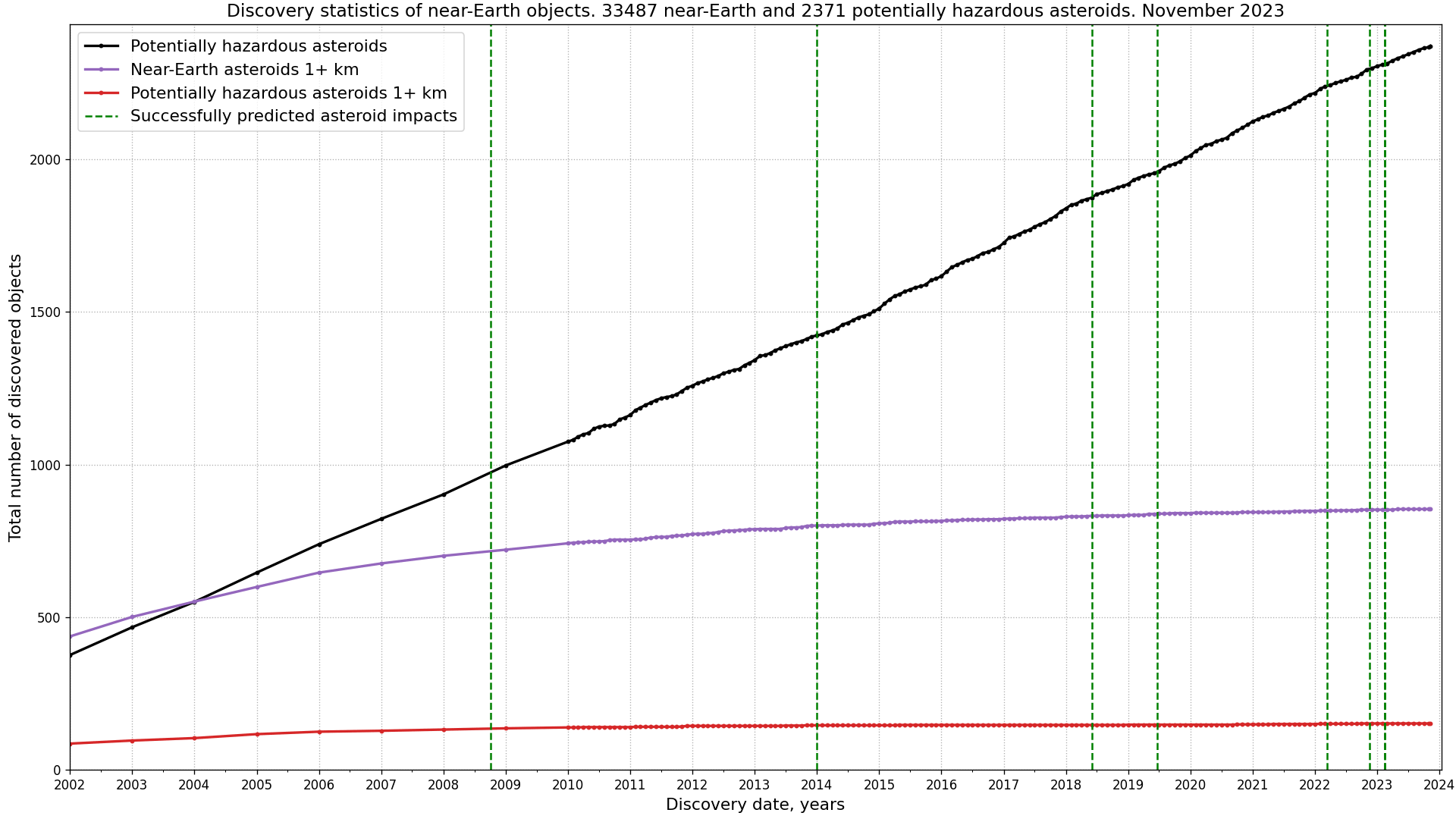 Data source: NASA Center for NEO Studies and IAU Minor Planet Center, discovery statistics
Code: python script for plotting graph with statistics of near-Earth objects - Close approaches and radar detections (marked blue)
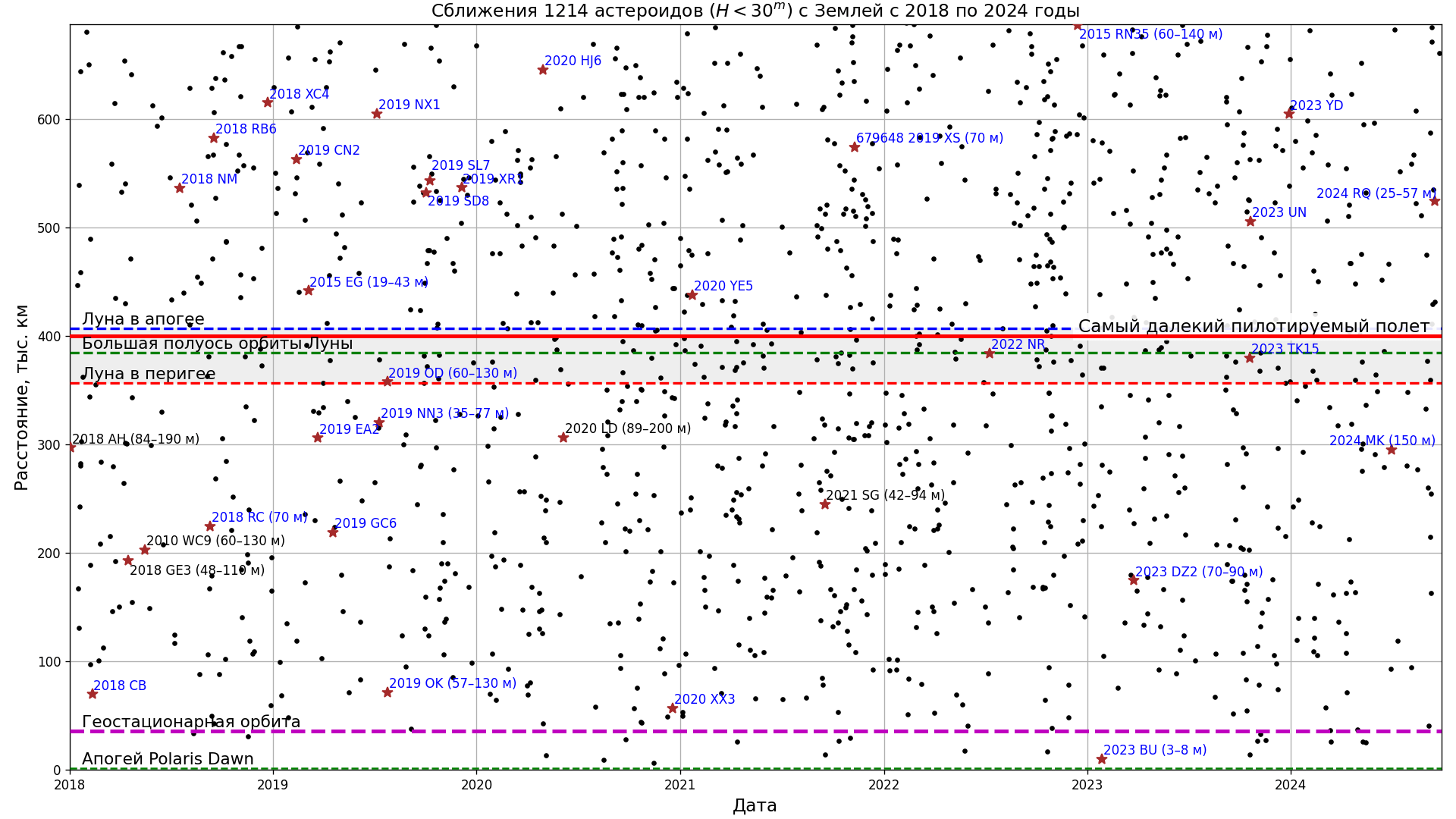 Data source: Small-Body DataBase (SBDB) Close-Approach Data API,
data query for D < 1.1 lunar distances after 2020-03-01 to H < 30 sorted by absolute magnitude H (mag).
Asteroid close approaches at a distance of up to 1.1 LD
See also list of asteroid close approaches to Earth
Data source: Small-Body DataBase (SBDB) Close-Approach Data API,
data query for D < 1.1 lunar distances after 2020-03-01 to H < 30 sorted by absolute magnitude H (mag).
Asteroid close approaches at a distance of up to 1.1 LD
See also list of asteroid close approaches to Earth
Code: python script for plotting a chart with close asteroid approaches - Distribution of Solar System bodies by average distance to Sun
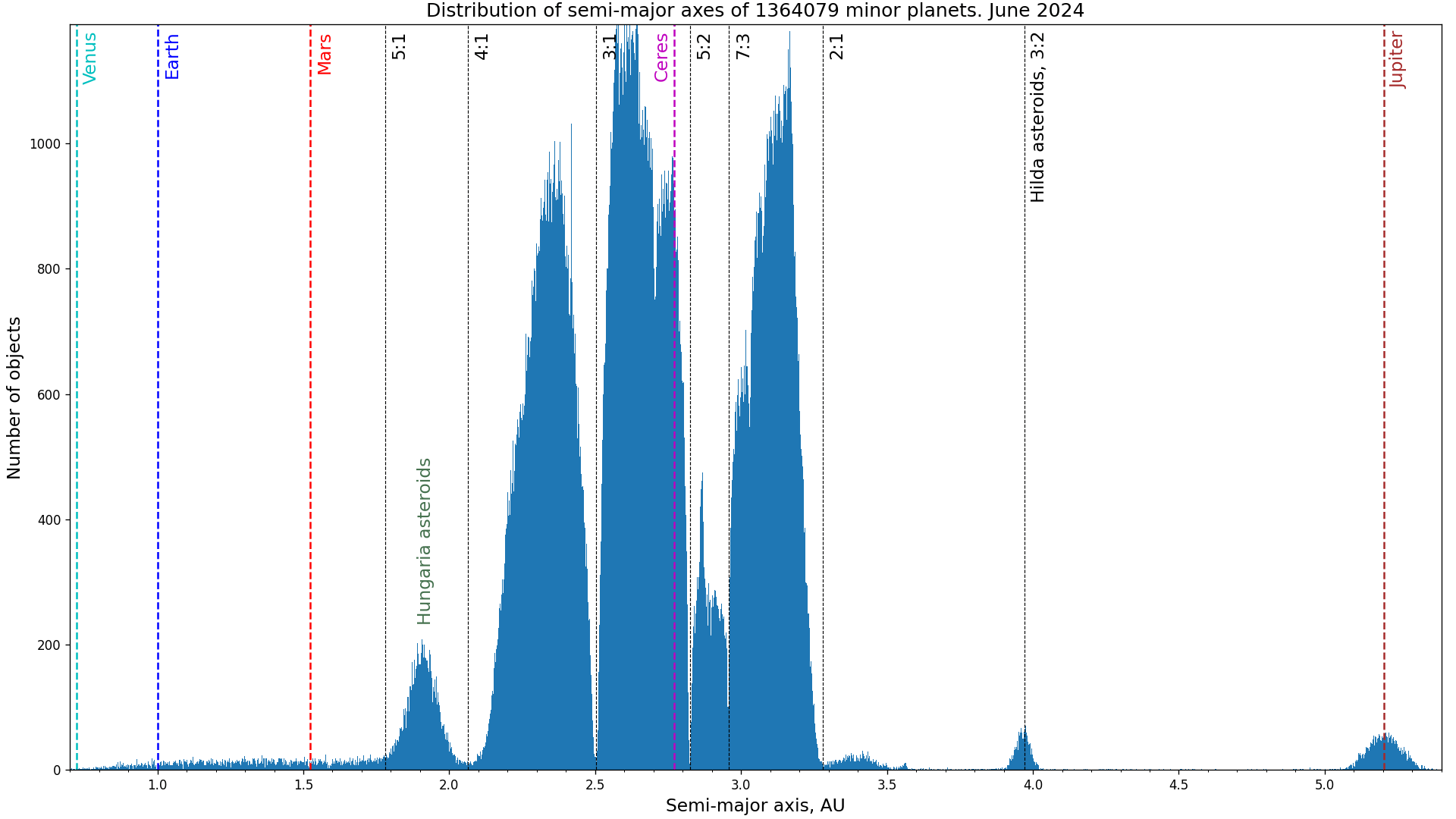
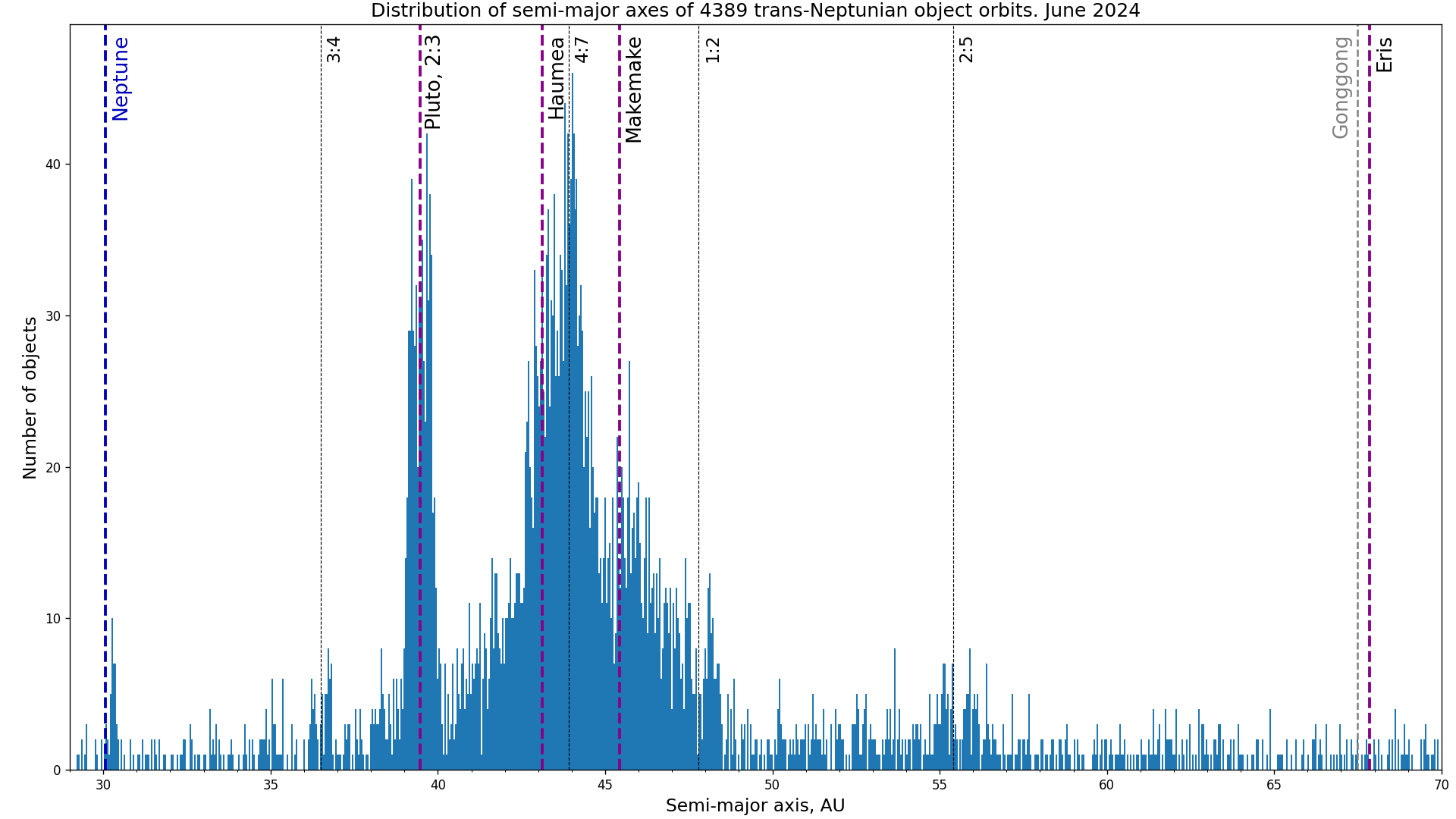 Data source: IAU Minor Planet Center, The MPC Orbit (MPCORB) Database,
break down of amateur discoveries
Data source: IAU Minor Planet Center, The MPC Orbit (MPCORB) Database,
break down of amateur discoveries
Code: python script for plotting histograms with the distribution of Solar system objects along the semimajor axis - Distribution of largest trans-Neptunian objects by absolute magnitude H
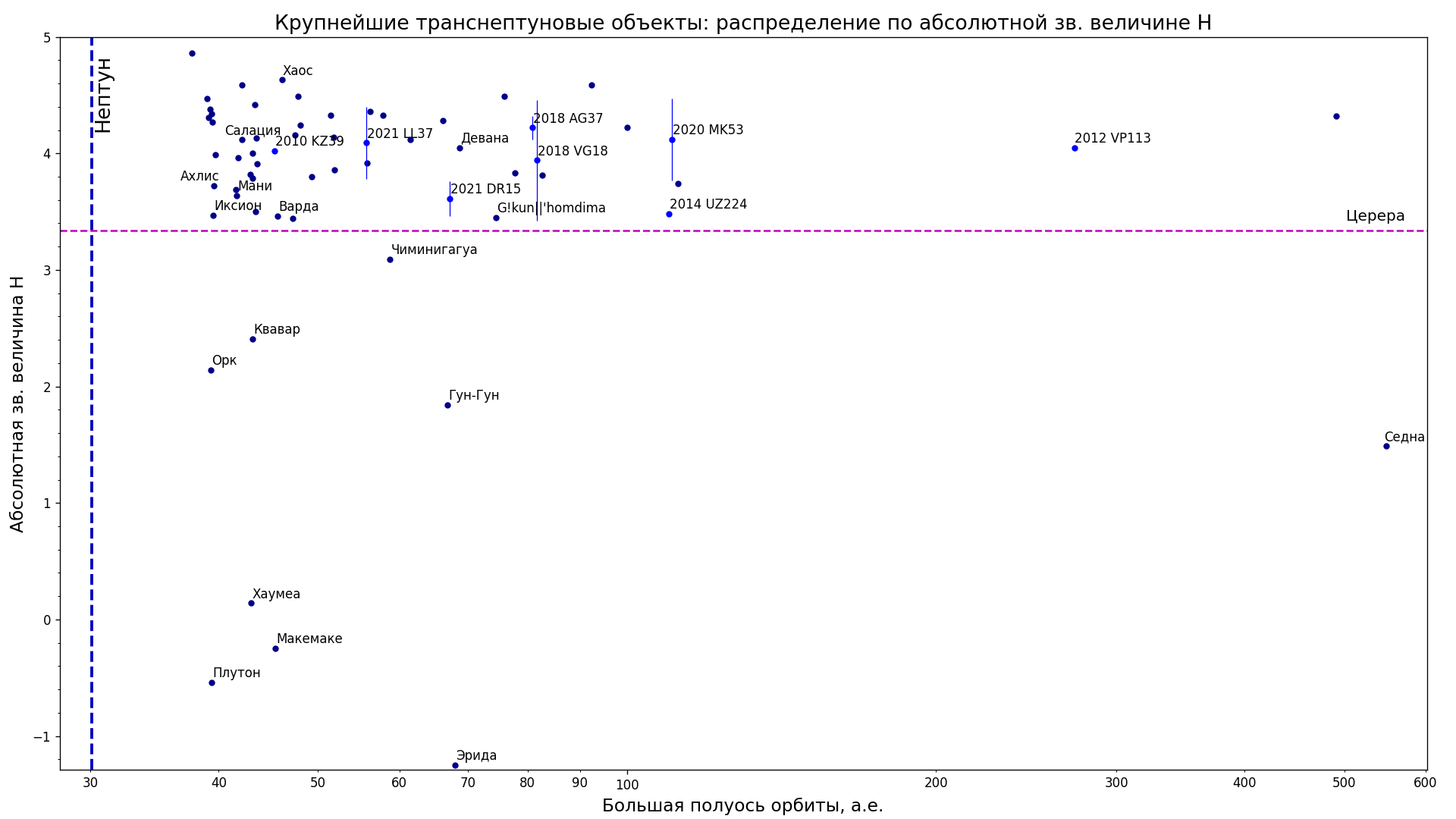 See version for only numbered trans-Neptunian objects.
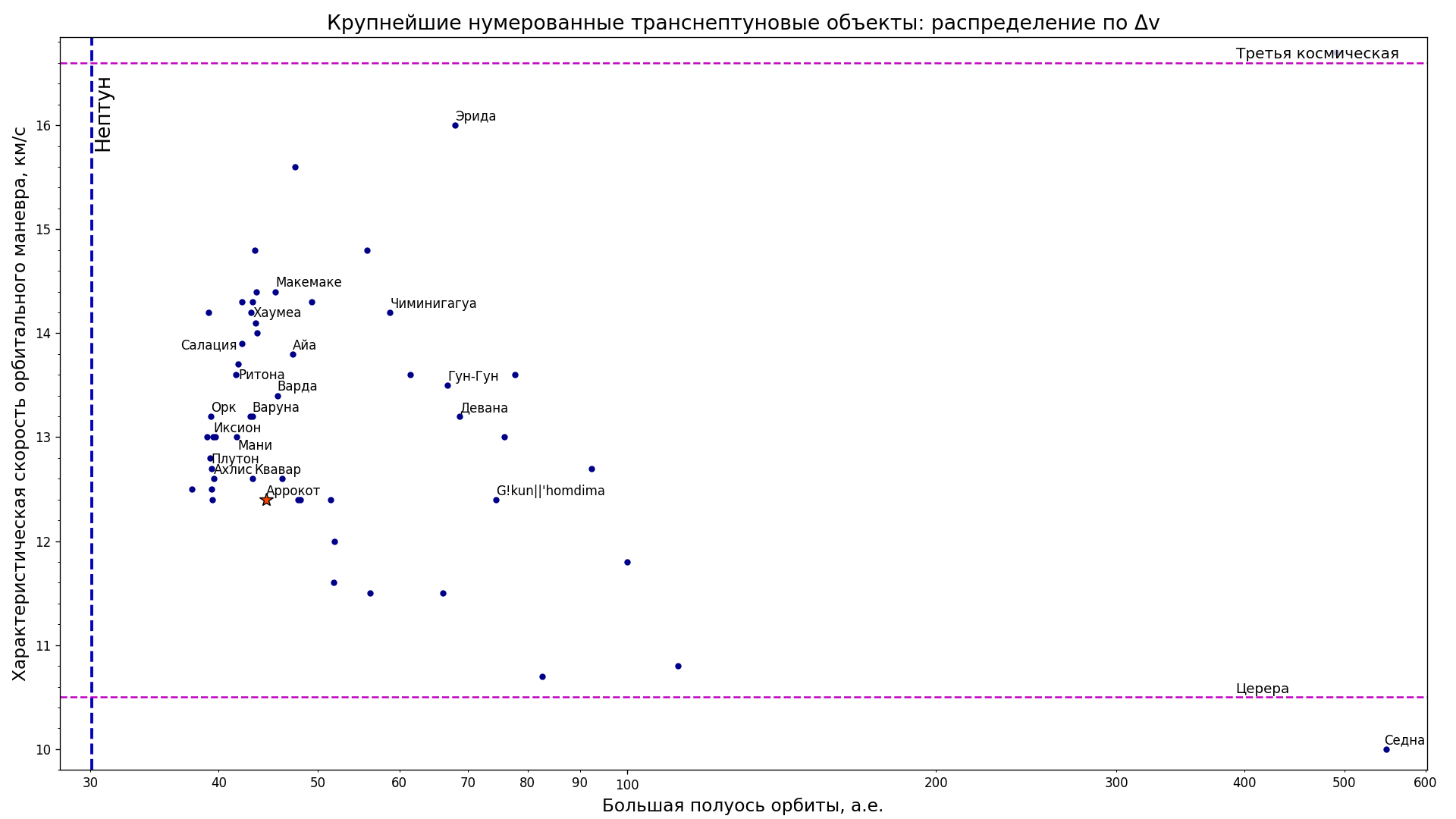 Data: MPC Web Service output as JSON file.
For parameters of unnumbered trans-Neptunian objects see MPC Database Search
Data: MPC Web Service output as JSON file.
For parameters of unnumbered trans-Neptunian objects see MPC Database Search
Code: see MPC Web Service, mpc-fetch.py - Distribution of minor planets by delta-v and travel time
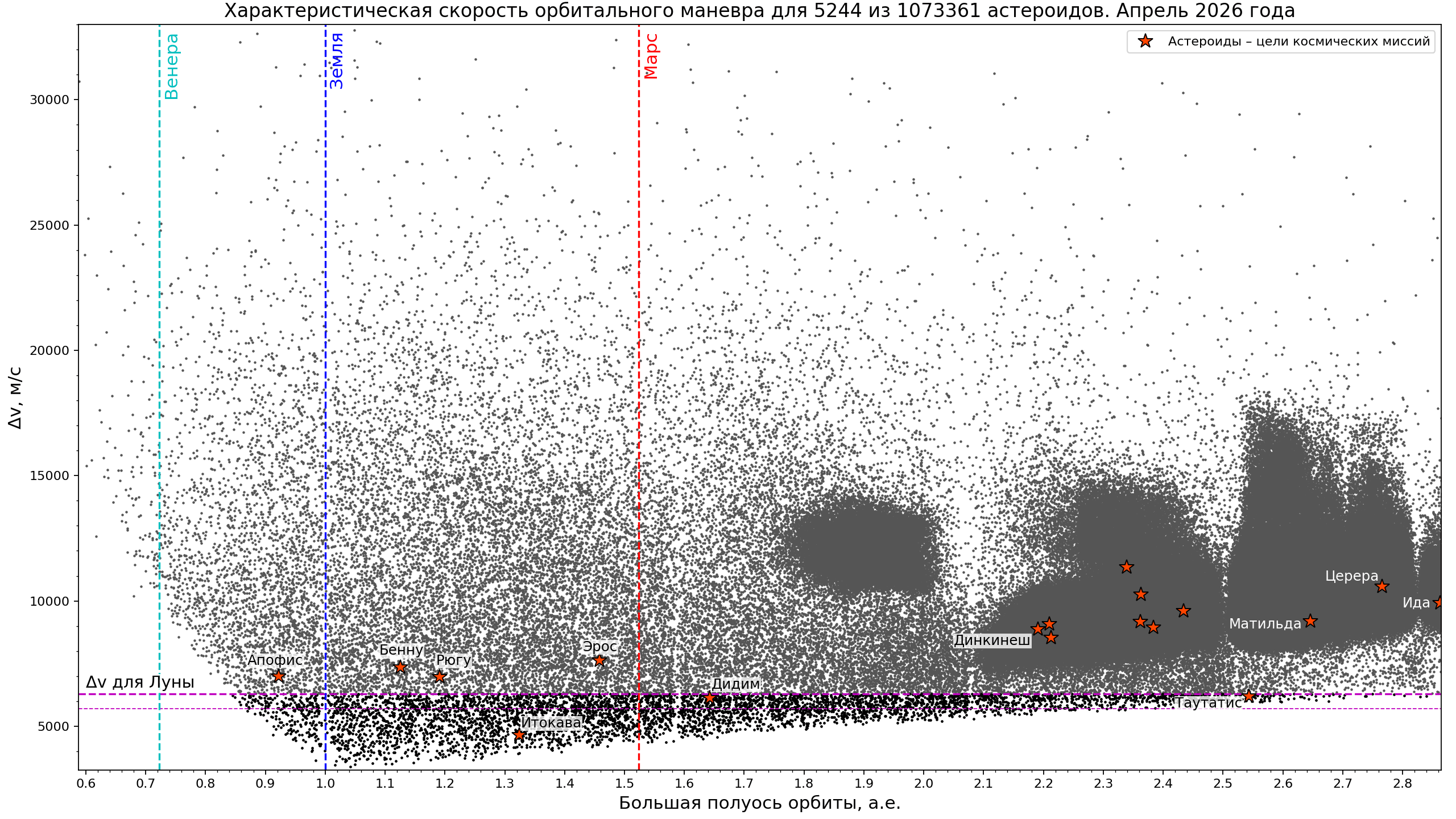
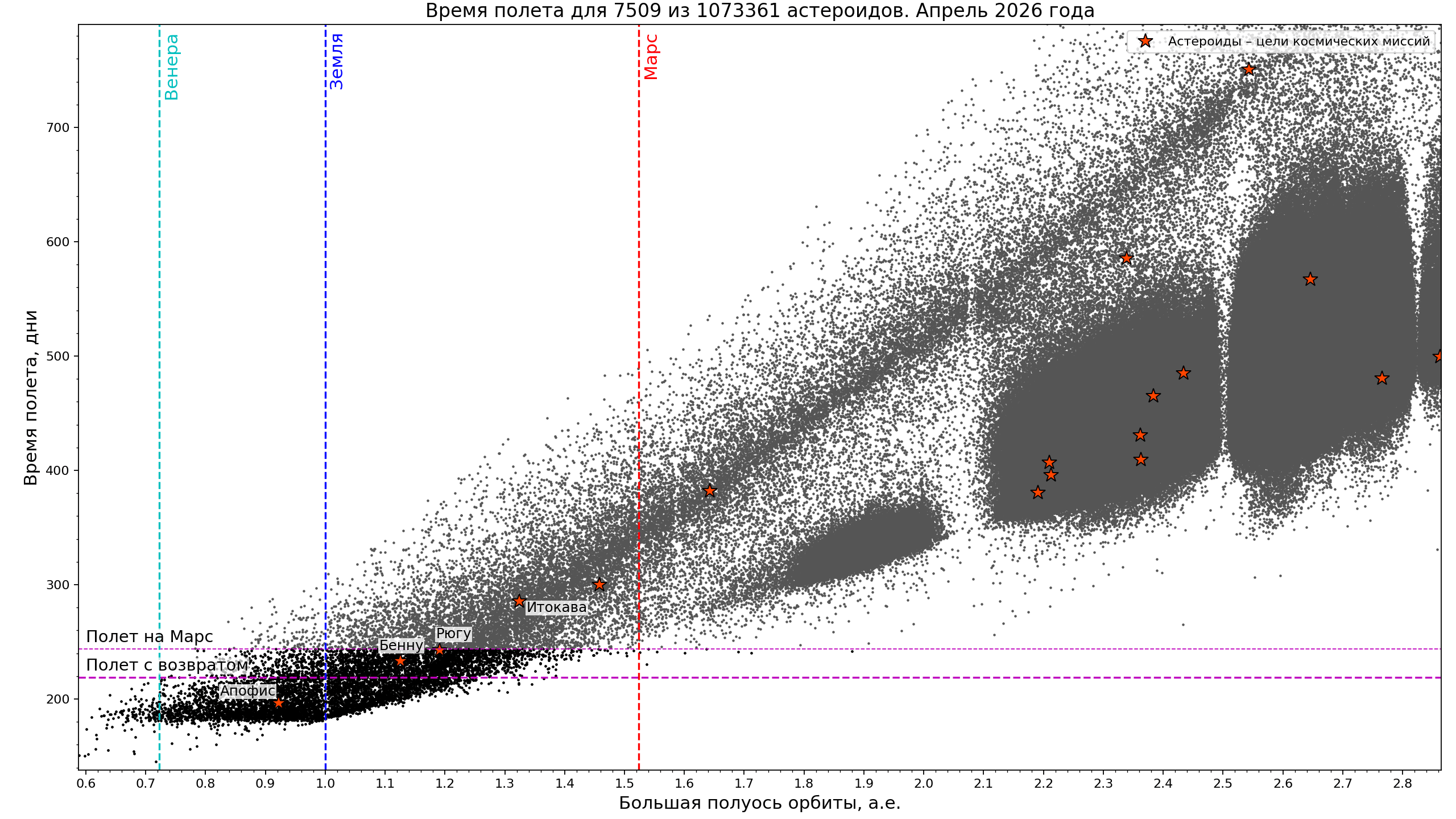
See Ultra-low delta-v objects and the human exploration of asteroids (2011).
Code adapted from A Delta-V map of the known Main Belt Asteroids (2018), pdf, see Main_Belt_Code_V3.py file from Dataverse, Earth-Approaching Asteroids as Targets for Exploration. Shoemaker, E.M. and Helin, E.F., 1978, NASA CP-2053, pp. 245-256 (1978)
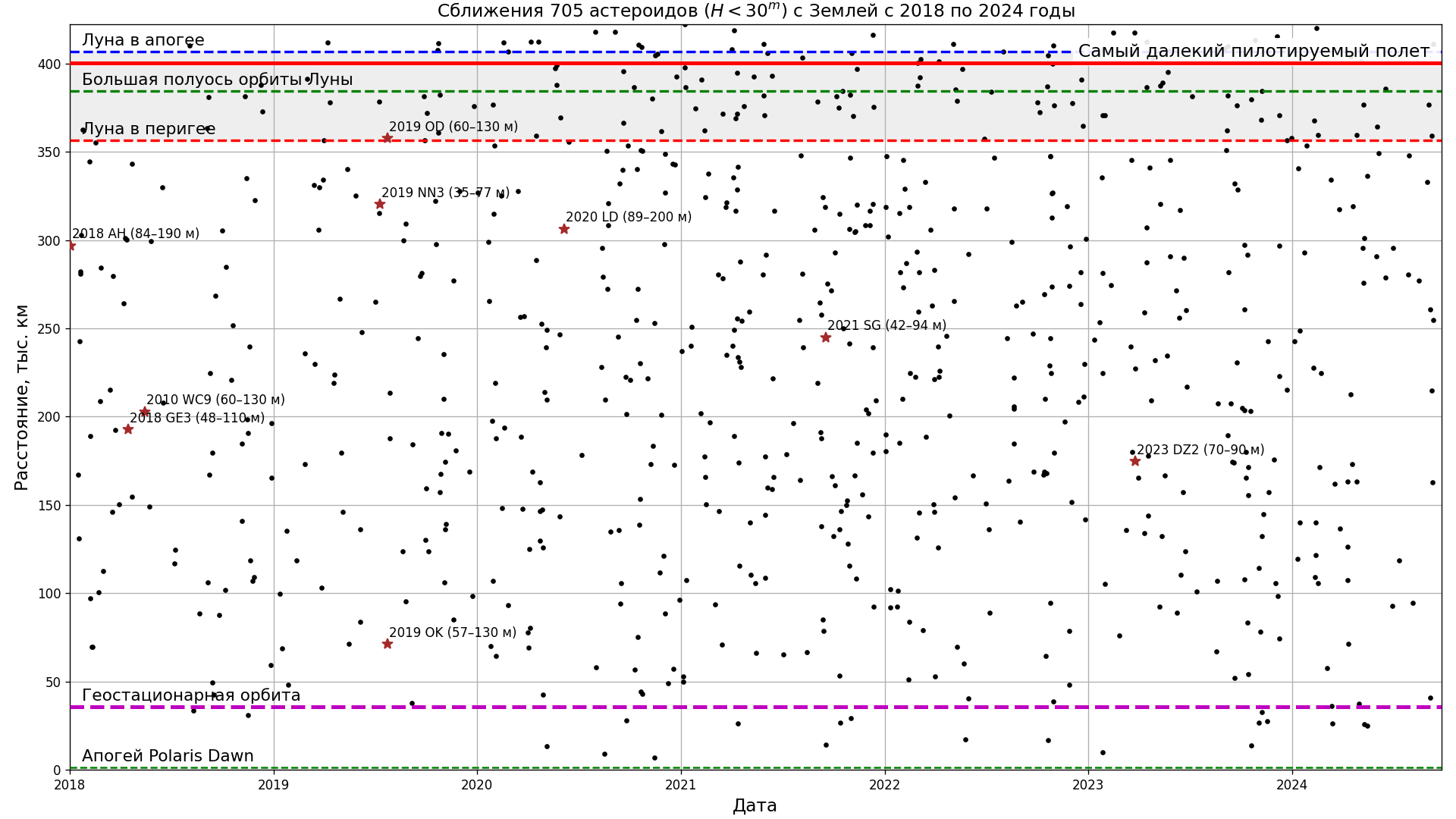
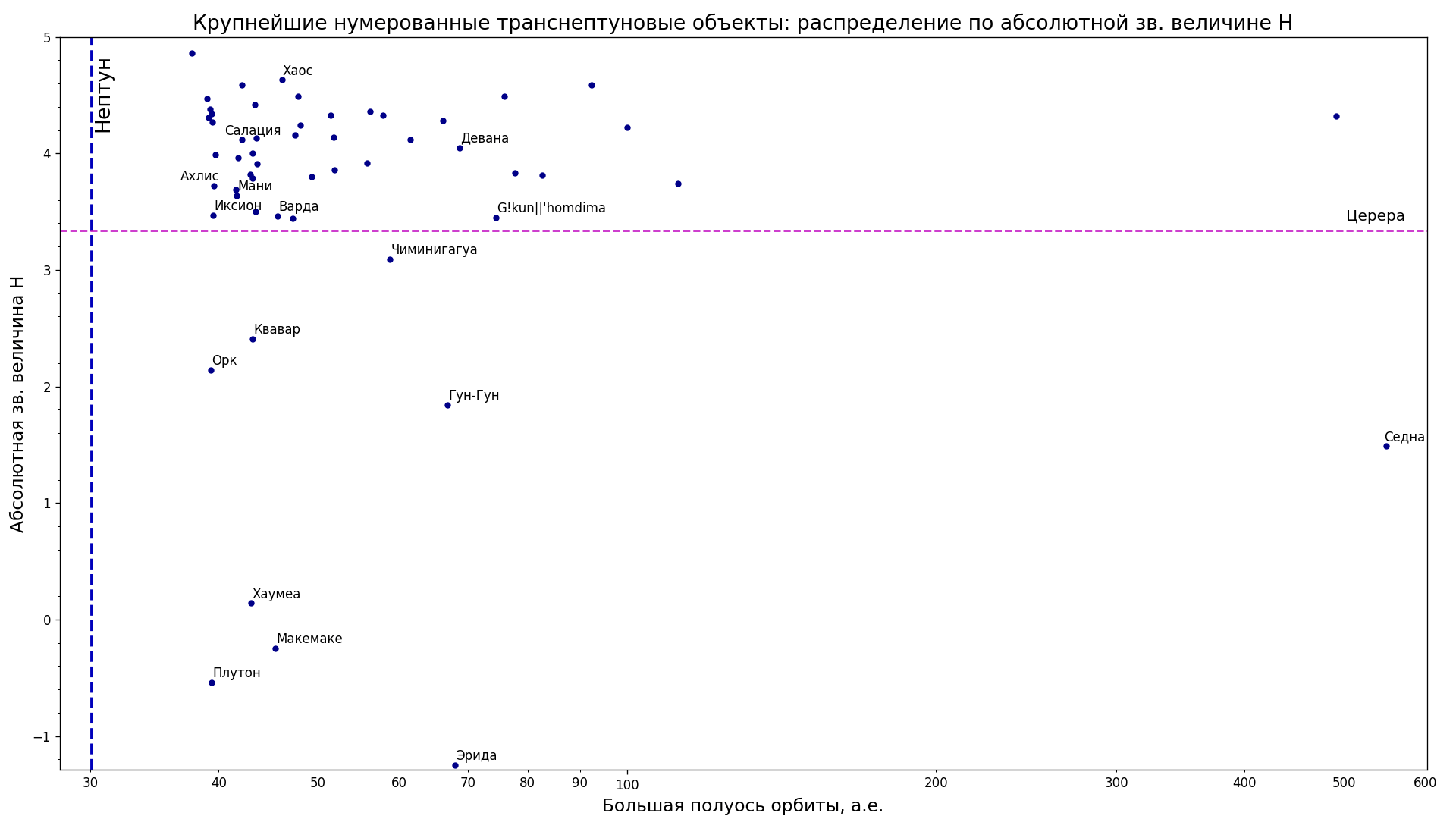
Image optimization applied
For all Solar System objects related code see this directory